Junk Reps: The Shot Quality Numbers That Prove Some Threes Are Just Wasted Possessions
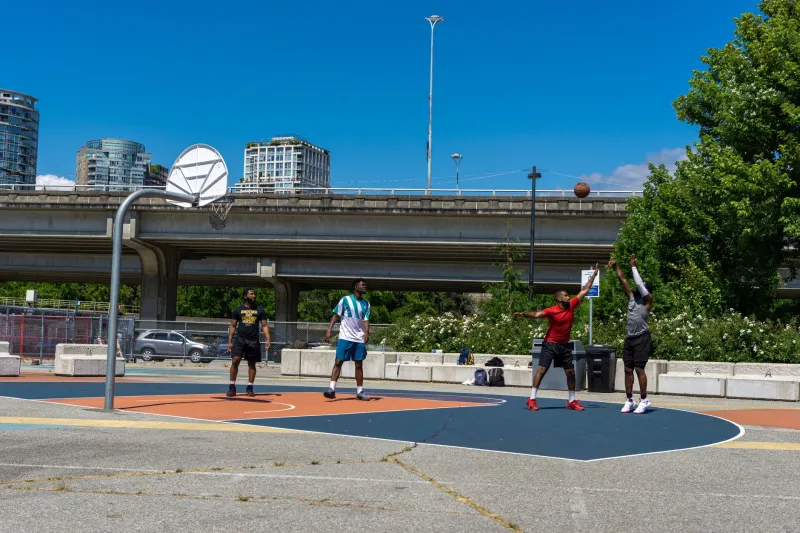
There's a version of three-point basketball that looks great on a highlight reel and absolutely terrible in a spreadsheet. A pull-up from 27 feet with a hand in your face and four seconds on the shot clock isn't a bold offensive statement — it's a turnover with extra steps. The ball just happens to go toward the basket.
Shotquality data has gotten sophisticated enough to expose exactly this kind of attempt, and what it's showing isn't pretty for a handful of NBA franchises that are essentially addicted to volume without regard for context.
What Shot Quality Is Actually Measuring
When analysts talk about shot quality in the context of threes, they're not just looking at whether a guy is a 38% shooter. They're layering in defender proximity (typically measured in feet from the shooter at release), shot clock remaining, floor spacing at the moment of the catch, and distance from the arc. Each variable chips away at expected value in its own way.
A wide-open corner three with 15 seconds on the clock and four teammates in optimal spacing positions is a fundamentally different basketball action than a step-back from 26 feet with a closeout arriving and eight seconds left. Both count as one three-point attempt in the box score. Only one of them makes any offensive sense.
The concept of "expected points per attempt" — sometimes called xPPA or eFG+ depending on which tracking system you're using — tries to capture that difference. And the gap between the best and worst three-point attempts across the league is bigger than most casual fans would guess.
The Desperation Tax
Here's a useful way to think about it: every shot exists somewhere on a spectrum between deliberate and desperate. Deliberate shots come from offensive systems working as designed — the pass swings, a shooter catches in rhythm, the defense is a step late. Desperate shots happen when the offense breaks down, the clock is bleeding out, or a player just decides to create something from nothing.
The efficiency gap between those two poles is enormous. Deliberate threes — open, in rhythm, from good floor positions — tend to cluster around 1.1 to 1.25 expected points per attempt depending on the shooter. Desperation threes, the ones launched under duress with a hand in the face and minimal spacing support, often drop below 0.85. That's worse than an average mid-range jumper, which is saying something given how much the analytics community has worked to bury mid-range shots over the past decade.
The teams taking the most desperate threes are essentially paying a hidden efficiency tax on every one of those possessions. They're not just missing — they're missing at a rate that punishes them more than a turnover would in some scenarios.
Which Teams Are Most Exposed
Without naming specific rosters (because this stuff shifts season to season), the pattern tends to show up in a few predictable situations. Teams with high-usage isolation players who bail themselves out with late-clock pull-ups. Teams that run transition offenses built on pace but don't have the personnel to generate clean looks before the defense sets. And teams that mistake "we shoot a lot of threes" for "we shoot good threes."
Volume and quality are genuinely different things, and the box score doesn't care which one you're chasing. A team shooting 38 threes a game at a 32% clip from poor situations isn't playing modern basketball — it's just playing chaotic basketball with a three-point coat of paint on it.
The interesting analytical signal is in the distribution of attempt quality. Elite offensive teams tend to have shot quality curves that skew heavily toward deliberate attempts. The worst offensive teams often have flatter curves — they're taking a much higher share of junk reps mixed in with their good looks.
Distance Is Only Part of the Problem
One thing shot quality data has clarified is that raw distance from the arc isn't the primary driver of attempt quality. A shot from 25 feet with zero defensive pressure and good spacing is still a high-quality attempt. A shot from 22 feet — right at the corner — with a defender's hand in the shooter's vision and only six seconds left is a low-quality attempt despite being theoretically closer.
This is where a lot of casual analysis goes sideways. People see a team launching deep threes and assume the distance is the problem. Sometimes it is. But more often the real culprit is the combination of shot clock pressure and defensive positioning. Teams that can't generate open looks early in the shot clock are forced into increasingly difficult attempts as the clock winds down, and that's where the efficiency hemorrhage really kicks in.
The Fix Isn't Fewer Threes
Here's the thing — this analysis doesn't argue that teams should shoot fewer threes. That ship has sailed, and the math still favors three-point attempts over most alternatives when the attempts are quality ones. The argument is about which threes to take.
The teams that have cracked this tend to have one thing in common: offensive patience. They're willing to swing the ball an extra time, run an extra action, or even accept a slight drop in pace in exchange for generating a cleaner look. The shot clock is a resource to be managed, not just a countdown that ends in a heave.
Shot quality metrics are essentially a report card on offensive decision-making. And right now, some teams are failing that class while congratulating themselves on their three-point attempt rate. The numbers see through it, even when the eye test doesn't.
At Point3, we'll keep watching the distributions. Because beyond the arc, not all attempts are created equal — and the ones that aren't are costing teams more than they realize.