Open Layups in Broad Daylight: The Hidden Cost of Chasing Elite Three-Point Shooters
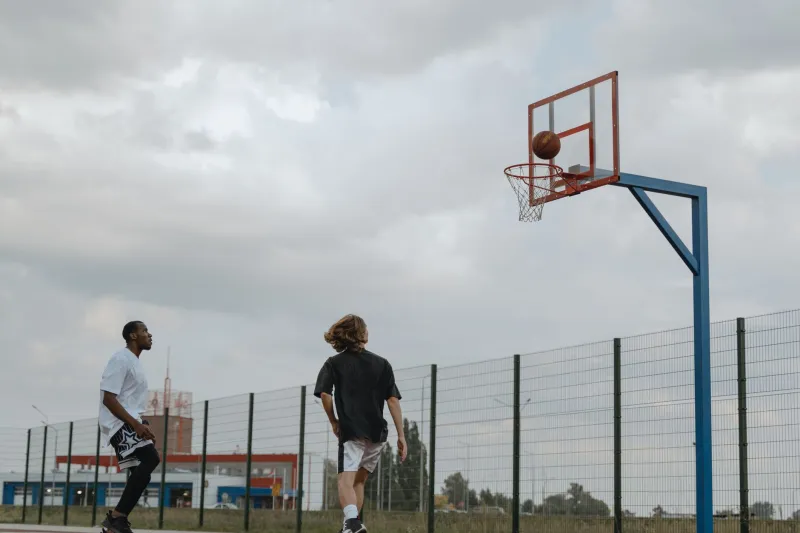
There's a moment that happens dozens of times every NBA game, and most casual fans miss it entirely. A defender takes one extra step toward a shooter camped on the wing. Just one step. And somewhere on the other side of the floor, a driving lane opens up like a highway at 3 a.m. A big man rolls to the rim. A guard accelerates off a screen. An uncontested layup goes up.
No one in the broadcast booth calls it a defensive breakdown. But analytically? That one step is a tax — and elite shooters are collecting it on every possession.
What Gravity Actually Means in Basketball Terms
You've heard the term "floor spacing" thrown around constantly, but gravity is the more precise concept. Gravity refers to how much defensive attention a player commands, measured not just by where his defender lines up, but by how often secondary defenders rotate, help early, or abandon their own assignments to account for him.
Tracking data from Second Spectrum and similar systems now lets analysts quantify this in ways that were impossible five years ago. Metrics like "closeout frequency," "defensive displacement rate," and "help shadow distance" all point to the same thing: elite shooters don't just beat defenders one-on-one. They bend entire defensive schemes.
Steph Curry is the most obvious example. When Golden State runs a simple pick-and-roll with Curry as the ball handler, opposing defenses often deploy what's called an "ice" or "drop" coverage — except they can't fully commit to a drop because Curry will pull up from 30 feet. So they send the big up. Which means the roller has a runway. Which means the corner shooter is left alone. Which means someone, somewhere, is getting an open look or a wide-open layup before the shot clock hits 15.
That's the gravity tax in action.
The Math Defenses Can't Solve
Here's the fundamental problem: there are five offensive players and five defenders. If one offensive player demands 1.3 defenders worth of attention — meaning his defender plus a partial rotation from a helper — then the math says someone else is getting 0.7 defenders on them. That's not a metaphor. That's arithmetic.
Last season, teams with at least two shooters posting 40% or better from three forced significantly more "uncontested" rim attempts than teams without that spacing. The correlation isn't coincidental. When defenses have to honor multiple perimeter threats simultaneously, the rim becomes, effectively, under-protected.
The most dangerous offensive sets aren't complicated. They're simple — deliberately simple — because they force defenses to make impossible choices at full speed. A Spain pick-and-roll with a knockdown shooter in the dunker spot isn't clever because of its geometry. It's clever because it forces a defense to simultaneously account for the ball handler pulling up, the screener rolling, the dunker cutting, and the shooter spotting up. Four threats. Five defenders. Subtract the guy guarding the ball. You're down to four defenders for three serious options. Someone is open.
How Play-by-Play Data Exposes the Pattern
Dig into play-by-play data for any team with a legitimate shooting threat — Klay Thompson, Jayson Tatum, Desmond Bane, Buddy Hield — and you'll notice a consistent pattern in the shot quality data around them. Their teammates don't just get more shots. They get better shots.
Expected field goal percentage (xFG%) on attempts within 5 feet of the rim climbs noticeably when elite shooters are on the floor. That's not because the bigs suddenly got more athletic. It's because the defenders responsible for protecting the rim are cheating toward the perimeter. They're paying the gravity tax.
One particularly telling stat: closeout distance. When an elite shooter sets up on the wing, his defender's average positioning shifts significantly closer to the three-point line compared to when a replacement-level shooter occupies the same spot. That repositioning pulls the defender's center of gravity toward the arc — and away from the paint. The driving lane that opens up isn't a mistake. It's a direct, measurable consequence of rational defensive decision-making.
Offenses That Get It, and Ones That Don't
The teams winning the gravity tax argument aren't necessarily the ones with the most shooters. They're the ones who understand when and how to exploit the defensive overcommitment.
Boston under Joe Mazzulla has become particularly good at this. Tatum's gravity is enormous, but the Celtics' best possessions often feature Tatum as a decoy — drawing the closeout, holding it a half-second longer than necessary, then hitting the cutter or the roller at the exact moment the defense is most overextended. The shot that results is often a layup or a point-blank mid-range look, not a three. That's the gravity tax being collected in the most efficient currency possible.
Contrast that with teams that stack shooters without a true gravity anchor. If every shooter on the floor is a "shoot if open" type rather than a "you must respect me off the dribble" type, defenses can sag comfortably, protect the rim, and dare you to shoot over them. The math only breaks when defenses genuinely can't afford to let someone catch and shoot.
What This Means for Fantasy and Betting Angles
For fantasy basketball players tracking efficiency, this is actionable information. Big men who play significant minutes alongside elite shooters — especially in pick-and-roll heavy systems — tend to post above-average true shooting percentages because their shot attempts skew heavily toward the rim. When evaluating a center's fantasy value, checking who's spacing the floor around him matters as much as his own skill level.
From a betting perspective, team-level offensive efficiency numbers can be misleading when a primary shooter is injured or sitting. A team might look like a 112-point-per-100-possessions offense on paper, but if that number was built with an elite shooter commanding defensive attention, the replacement-level version of that offense is often dramatically worse than the raw numbers suggest. The gravity tax disappears when the shooter does.
The Bigger Picture
Basketball at its core is a game of resource allocation under time pressure. Defenses have a fixed number of bodies and a limited amount of rotation time. Elite shooters don't just score points — they force defenses to spend resources they don't have, protecting against a threat that might not even materialize on a given possession.
Every time a defense sends an extra half-step toward a shooter on the wing, it's making a calculated bet that the three is more dangerous than whatever else might happen. Sometimes that's the right call. But tracking data increasingly shows that elite offenses are getting very, very good at making that bet cost the defense anyway — not with a made three, but with an uncontested layup that never should have been available in the first place.
The gravity tax is real. And the smartest teams in the league are running up the bill every single game.