When Stars Steal the Spotlight: The Hidden Efficiency Drain on Role Players Beside Elite Shooters

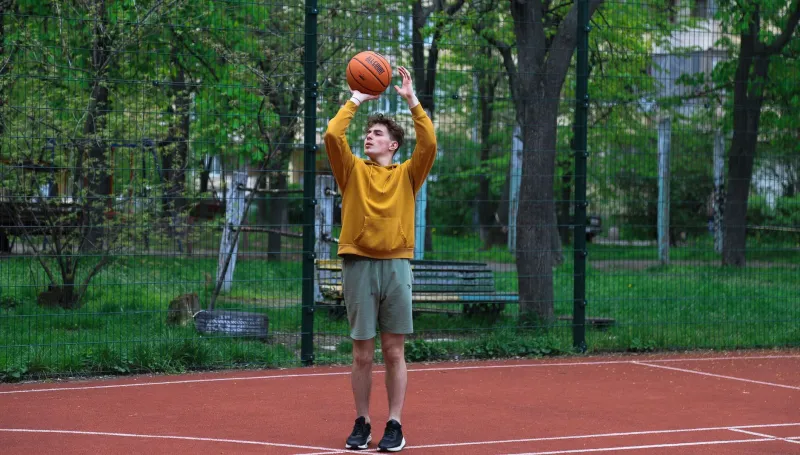
Photo by Photo by LOGAN WEAVER | @LGNWVR on Unsplash on Unsplash
Gravity is one of basketball's favorite buzzwords right now. Drop it into any analytics conversation and heads will nod. The idea makes intuitive sense: when a defense has to account for a 40-percent-from-three threat on every possession, other guys get open looks. Simple physics, right?
Except physics doesn't always translate cleanly onto a basketball court. When you start digging into on-off splits and shot quality data for role players paired with elite perimeter scorers, a different picture starts forming — and it's a lot more complicated than the clean narrative we've all bought into.
There's a real cost to playing beside a superstar shooter. Call it the gravity tax.
What the Standard Story Gets Right
Let's be fair. The conventional wisdom isn't wrong — it's just incomplete. When a guy like Steph Curry or Damian Lillard operates as a primary ball-handler, defenses genuinely do collapse. Help rotations shift. Off-ball defenders cheat toward the star, leaving catch-and-shoot opportunities dangling at the corners and the wings. On paper, that's a free lunch for the shooters standing around him.
The spacing numbers back this up in broad strokes. Teams with elite shooting threats at the top of the offense typically generate more open looks per 100 possessions than teams built around drivers or post scorers. If you're measuring openness by closest defender distance, the numbers trend positive when the superstar is on the floor.
So where does it go wrong?
The Problem Isn't Openness — It's Attention
Here's the thing about shot quality metrics that a lot of the surface-level gravity conversation skips over: an open look and a good open look aren't the same thing.
When a defense loads up to stop a superstar shooter, the help doesn't just disappear — it relocates. Defenses that can't afford to let their primary assignment get free will often deploy a second layer of attention, something closer to a tag or a stunt, designed to disrupt the ball-handler's rhythm. That second layer almost always comes from somewhere, and that somewhere is usually a role player's coverage assignment.
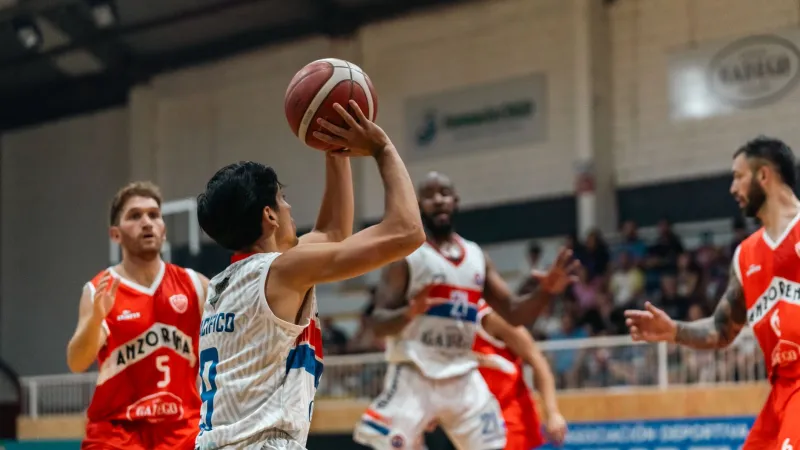
What happens next is subtle. The role player gets the open catch — technically open — but the defender who just vacated to help on the star is already in recovery mode, closing out hard. The look that reads as open in the tracking data is functionally tighter than it appears. The shooter is catching with a defender in his hip pocket a half-second later than the raw numbers suggest.
This is where on-off splits start telling a different story. Pull the three-point percentages for role players in their minutes with versus without the team's primary shooting threat, and you'll find a pattern that doesn't fit the standard gravity narrative. A meaningful chunk of role players shoot worse from three when the superstar is on the floor — not dramatically worse in every case, but consistently enough to raise questions.
The Closeout Problem
Defensive closeouts have evolved. Teams aren't just scrambling anymore — they're practicing stunts and rotations specifically designed to make life harder for the shooters benefiting from a star's gravity. A well-drilled closeout from a tag defender, arriving at full sprint with a hand in the shooter's face, can neutralize a look that the tracking system logged as wide open.
Role players who are catch-and-shoot specialists — guys who don't create off the dribble and rely almost entirely on the quality of their catch — are particularly exposed here. Their value proposition depends on getting clean, settled looks. When defenses are disciplined enough to recover from their help rotations quickly, those looks get muddier.
The irony is that the better the superstar shooter, the more disciplined the opposing defense has to be, and the harder they'll practice those closeout rotations. In other words, the gravity tax gets heavier as the star gets better.
Reading the On-Off Splits Honestly
One of the more telling places to look is role player efficiency in lineups where the superstar sits. You'd expect a drop — fewer open looks, weaker offensive structure, more defensive attention freed up to roam. And sometimes that's exactly what you see.
But not always. There's a real subset of role players who post noticeably better three-point numbers in the absence of their team's primary shooter. The defensive attention redistributes more evenly. Closeouts arrive later. The looks aren't manufactured by gravity — they're just naturally occurring within a more balanced offensive ecosystem.
That doesn't mean those players are better off without the star. Lineup net ratings still tend to favor the superstar's minutes. But it does complicate the assumption that every role player is automatically cashing in on the gravity benefit.
What Coaches Should Be Thinking About
The practical implication here isn't that teams should bench their elite shooters. That's obviously absurd. But roster construction and rotation decisions are worth revisiting through this lens.
If a role player's three-point efficiency dips in his minutes alongside the star, the question worth asking is whether that player's skill set is actually compatible with that offensive environment. A guy who needs time and space to get comfortable before releasing — a slower catch-and-shoot rhythm, or someone who needs a clean corner set — might be getting squeezed by the defensive attention the star generates.
Conversely, a player who can operate off movement screens, who can shoot off one or two dribbles, or who can attack a closing defender off the catch might actually extract more value from that same environment. The gravity is real; the question is whether the role player is positioned to take advantage of it.
Coaches who are honest about this distinction — who look at shot quality data rather than just raw open-look rates — are going to make smarter rotation decisions. And in a league where three-point efficiency differences of two or three percentage points can swing playoff series, those decisions matter.
The Takeaway
Gravity is real. Elite shooters do create opportunities. But the gravity tax is real too, and it doesn't show up cleanly in the headline numbers. It lives in the half-second difference between a clean catch and a contested one, in the closeout rotations defenses have been drilling all season, in the on-off splits that don't quite fit the story we've been telling ourselves.
The best analytics work doesn't just confirm the conventional wisdom — it stress-tests it. And when you stress-test the gravity narrative hard enough, you find a more honest version of the truth: playing beside a superstar shooter is a privilege, but it comes with strings attached. How much those strings cost depends entirely on who's wearing them.