Inches That Matter: How a Tiny Defensive Shift Is Forcing Offenses to Rethink Everything
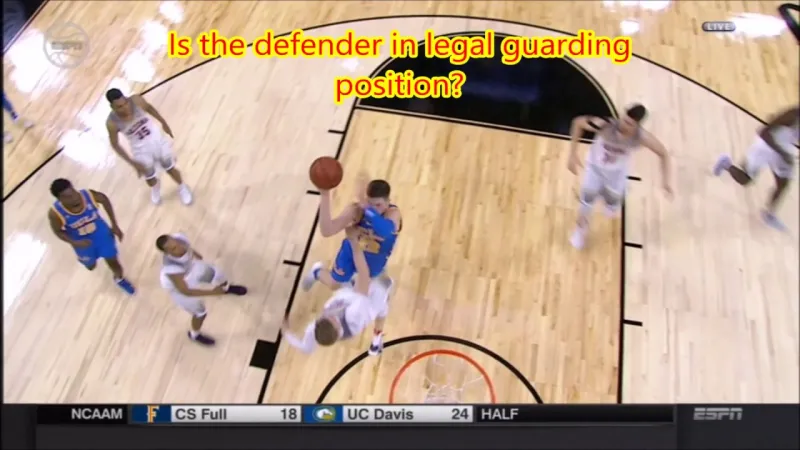
Photo: basketball defender guarding shooter perimeter close coverage NBA, via i.ytimg.com
A foot and a half doesn't sound like much. In most contexts, it isn't. But on a basketball court, in the space between a shooter's release point and a defender's outstretched hand, eighteen inches can be the difference between a clean look and a contested prayer.
Defenses across the NBA — and increasingly at the college level — have figured this out in a big way. What's emerging in 2024-25 is a refined, data-backed approach to perimeter coverage that's less about the dramatic closeout and more about where defenders are stationed before the ball even moves. The scheme has a name in analytics circles: micro-spacing. And it's quietly rewriting the rules of three-point defense.
What Micro-Spacing Actually Means
Traditional perimeter defense operated on a pretty simple premise. You sag off shooters to protect the paint, then close out hard when the ball swings. The closeout — that sprint from the paint to the three-point line — was the centerpiece of defensive technique for decades. Coaches drilled it constantly. Film sessions were full of it.
Micro-spacing challenges that logic at the source.
Rather than starting from a deep help position and recovering, defenders operating under a micro-spacing scheme never fully retreat in the first place. They maintain tighter initial positioning on known shooters — not quite full on-ball pressure, but meaningfully closer than the traditional gap coverage most offenses were designed to attack.
We're talking about defenders playing two to three feet closer to their assignment as a baseline, before any ball movement happens. That doesn't sound revolutionary. But when you map it against shooting percentage data, the effect is striking.
Tracking data from the last two seasons shows that catch-and-shoot three-pointers with a defender within four feet convert at roughly 31 percent. Bump the defensive distance to six feet and that number climbs to around 37 percent. Get to eight feet of separation and you're approaching 40 percent. The gradient is steep and it's consistent — every additional foot of space is worth real points over the course of a season.
Micro-spacing is essentially an attempt to keep defenders permanently operating in that four-to-five foot band rather than cycling in and out of it.
Why Now? The Data That Made This Possible
This kind of granular defensive positioning wasn't really feasible to implement league-wide until Second Spectrum and similar player-tracking systems became standard. Coaches can now pull up frame-by-frame positioning data on their own defenders and see, with precision, exactly how far off their guy a player was at the moment of a shot attempt.
That accountability changed the conversation. When an assistant can walk into a film session and show a defender that he was consistently six or seven feet off his assignment on catch-and-shoot situations, the conversation becomes very specific very fast. It's not a general note about effort or instinct — it's a measurable gap with a measurable cost.
Analytics departments have been pitching versions of this argument for years. What changed recently is that the data got granular enough to make the implementation practical and the buy-in from players and coaches finally followed.
The Ripple Effect on Offensive Spacing
Here's where things get really interesting from a design standpoint.
Most NBA offensive systems — and a growing number of college systems — were architected around a specific assumption: that help defenders would be positioned at least six to eight feet off the three-point line, creating driving lanes and kick-out opportunities. The entire logic of modern spacing offense depends on that gap existing.
Micro-spacing removes it. Or at least compresses it enough to change the math.
When shooters are being guarded tighter off the ball, a few things happen simultaneously. Drive-and-kick sequences generate less clean looks because the kick-out receiver is already being crowded. Off-ball movement — cuts, pin-downs, flare screens — has to be sharper and faster to generate any separation at all. And ball handlers who rely on the threat of the kick-out to create their own driving lanes suddenly find those lanes tightening because the defense isn't conceding the three in the first place.
Offensive coordinators who've been watching this trend describe it as a kind of defensive pressure that doesn't announce itself loudly but compounds over the course of a game. By the fourth quarter, offenses that haven't adjusted are finding their spacing systematically disrupted.
College Basketball Is Already Feeling It
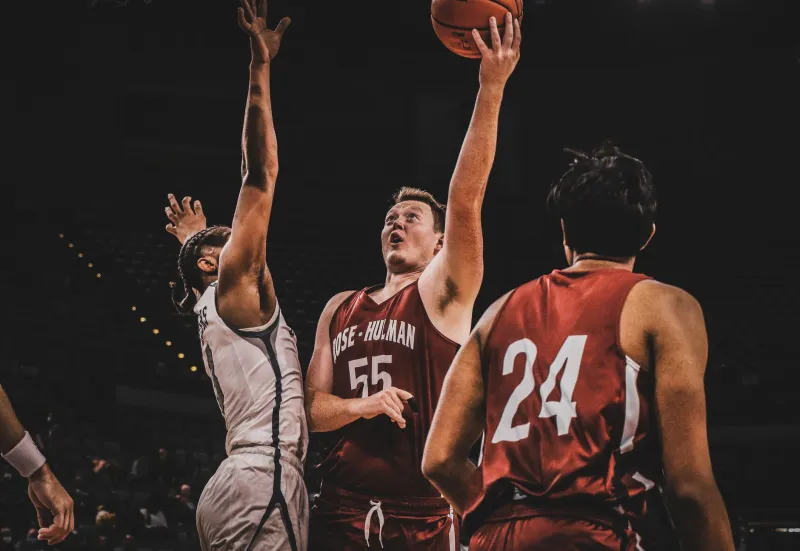
At the college level, where offensive sophistication varies more widely, micro-spacing has become a legitimate equalizer for defensively focused programs. Teams that can't match up athletically with high-major opponents are increasingly using tighter perimeter positioning to take away the three-point advantage that would otherwise be decisive.
The interesting wrinkle at the college level is physicality. College defenders can be more physical off the ball than NBA rules typically allow, which makes the tighter positioning even more disruptive. Shooters who rely on clean catch-and-shoot mechanics get bumped, redirected, and slowed in ways that accumulate across a 40-minute game.
Several mid-major programs have used this approach to hang with or beat higher-ranked opponents in tournament settings over the last two seasons. The data on those upsets consistently shows opponents shooting well below their season averages from three — and the defensive positioning data shows why.
The Offensive Counter-Counter
Defenses don't get the last word, of course. Offenses are already adapting.
The most effective counter to micro-spacing is what coaches are calling movement loading — designing actions that force defenders to make multiple decisions in quick succession before they can settle into that tight positioning. Stagger screens, drag actions, quick-hitting second-side reads. Anything that keeps the defense reacting rather than stationed.
The other adjustment is more conceptual: embracing the mid-range again. If defenders are camping closer to the three-point line to eliminate the corner three and the wing three, the pull-up jumper from 17 feet starts looking a lot more attractive than it did during the peak analytics-driven years when everything inside the arc was considered inefficient. The mid-range isn't back because it was ever actually good — it's back because the defense left it open.
That's the nature of the game at its highest level. Every adjustment creates a counter. Every inch gained defensively opens an inch somewhere else.
Right now, those defensive inches are winning. The question is how long before offenses close the gap.