Defensive Drift: How Positional Breakdowns Are Quietly Costing NBA Teams Three Points at a Time

Everybody loves pointing fingers at the guy who got cooked off the dribble or forgot to close out on a corner shooter. It's easy, it's visual, and it makes for great slow-motion breakdown content. But there's a quieter, more insidious problem spreading through NBA defenses right now—one that doesn't show up cleanly in box scores and rarely gets its own highlight clip.
Call it defensive drift. And it's costing teams big.
What Defensive Spacing Actually Means
When most fans hear "spacing," they think offense—shooters spread across the arc, driving lanes opened up, the whole modern basketball philosophy in a nutshell. But spacing is just as critical on the other end, and the principles are almost mirror images of each other.
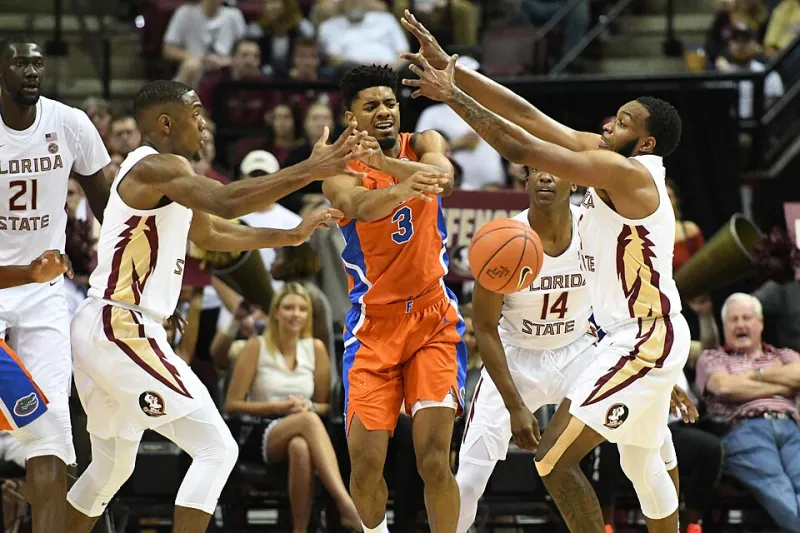
Good defensive spacing means your five guys are positioned to simultaneously protect the paint, contest perimeter shots, and rotate efficiently when the ball moves. Bad defensive spacing means you've got guys either clumped too close to the action—leaving shooters open in the corners and on the wings—or drifting too far from the paint, giving ball-handlers easy lanes to the rim.
Tracking data from Second Spectrum and similar platforms has made it possible to quantify exactly how far off their "ideal" positions defenders are at the moment of a shot attempt. And what that data shows is that certain teams are consistently 2-4 feet out of optimal position on a significant percentage of possessions. That might not sound like much, but at NBA pace and against elite offensive systems, those inches add up to an enormous amount of real estate.
The Cascading Effect Nobody Talks About
Here's what makes poor defensive spacing so damaging: it's not a single-possession problem. It's a cascading one.
When a help defender cheats too far toward the ball on a drive, he's not just leaving his man open—he's also signaling to the offense exactly where the next pass should go. Modern offensive coordinators are essentially running algorithms in real time, and when they see a gap in defensive positioning, they exploit it immediately. The first pass goes to the open shooter. If the rotation is slow or sloppy, the kick-out three is right there. If the rotation is fast but over-aggressive, that creates a new gap somewhere else on the floor.
This is why teams with poor spacing discipline don't just give up one or two bad looks per game—they give up waves of them. The offense essentially locks onto the weakness like a targeting system and keeps hammering it until the defense adjusts or the quarter ends.
Some of the league's worst offenders this season have been teams that switched to aggressive pressure schemes without fully accounting for how those schemes require near-perfect off-ball positioning to function. You can't trap ball-handlers and leave your weak-side defenders freelancing. The math just doesn't work.
Which Defenses Are Most Vulnerable
Without naming every struggling team outright, the pattern in the tracking data is pretty clear: teams that rank in the bottom third of the league in "defensive positioning error" (a metric measuring average distance from optimal position at shot attempts) are also giving up three-point attempts at a higher rate and at better average distances from the basket.
The correlation isn't perfect—great individual defenders can mask some of these structural problems—but it's strong enough to matter. Teams in that bottom tier are surrendering roughly 2.3 more three-point attempts per 100 possessions than league-average defenses, and those shots are coming from closer to the optimal shooting range on the arc. You don't want teams getting comfortable at 24 feet. You especially don't want them getting comfortable in the corners.
The corner three is the most efficient shot in basketball. Any defensive scheme that consistently leaves corner shooters with time and space is essentially handing the offense a 1.17-point possession on a silver platter. When you factor in how many times per game defensive drift creates that exact scenario, you start to understand why some teams' defensive ratings look so much worse than their individual personnel would suggest.
Predictability: The Hidden Cost
There's another layer here that the raw numbers don't fully capture: predictability.
When a defense has consistent spacing problems, its rotations become readable. Offensive coordinators study film obsessively, and when they see that a team's center consistently drifts toward the nail on drive situations—leaving the weak-side corner shooter unguarded for a beat too long—they build that into their game plan. The play call becomes almost automatic: attack the ball-side, force the rotation, hit the corner.
This is part of why certain teams seem to get torched by the same actions over and over. It's not that opposing coaches are geniuses. It's that the defense has an exploitable habit, and once it's identified on film, every team in the league starts running the same counters.
The best defenses in the league—the ones that consistently rank near the top in three-point defense and overall efficiency—share one underappreciated trait: their off-ball defenders move with the ball even when they're not directly involved in the play. That constant repositioning is what makes rotations look seamless and what prevents those 2-3 foot gaps from ever opening up in the first place.
Fixing the Problem Isn't Simple
Coaches know this stuff. They're not watching their teams hemorrhage corner threes and shrugging. The challenge is that correcting defensive spacing requires either changing personnel habits built over years of playing basketball, or simplifying the scheme enough that positioning becomes more automatic.
Neither option is easy mid-season. Habit change takes reps and repetition. Scheme simplification can blunt some of a defense's other strengths. And in a league where every team is trying to optimize offense, there's not a lot of margin for error on the other end.
What tracking data is making clear, though, is that teams can no longer hide these structural weaknesses. The numbers expose them, the offense exploits them, and the box scores eventually reflect them—even if the highlights only show you the final shot going in.
Defensive spacing isn't glamorous. But in a league where a single extra three-point attempt per game can swing a team from a four seed to a seven seed, getting it right might be the most undervalued edge left in the game.