System Shooter or Real Shooter? Tracking Data Exposes the Hidden Gap in Three-Point Stats
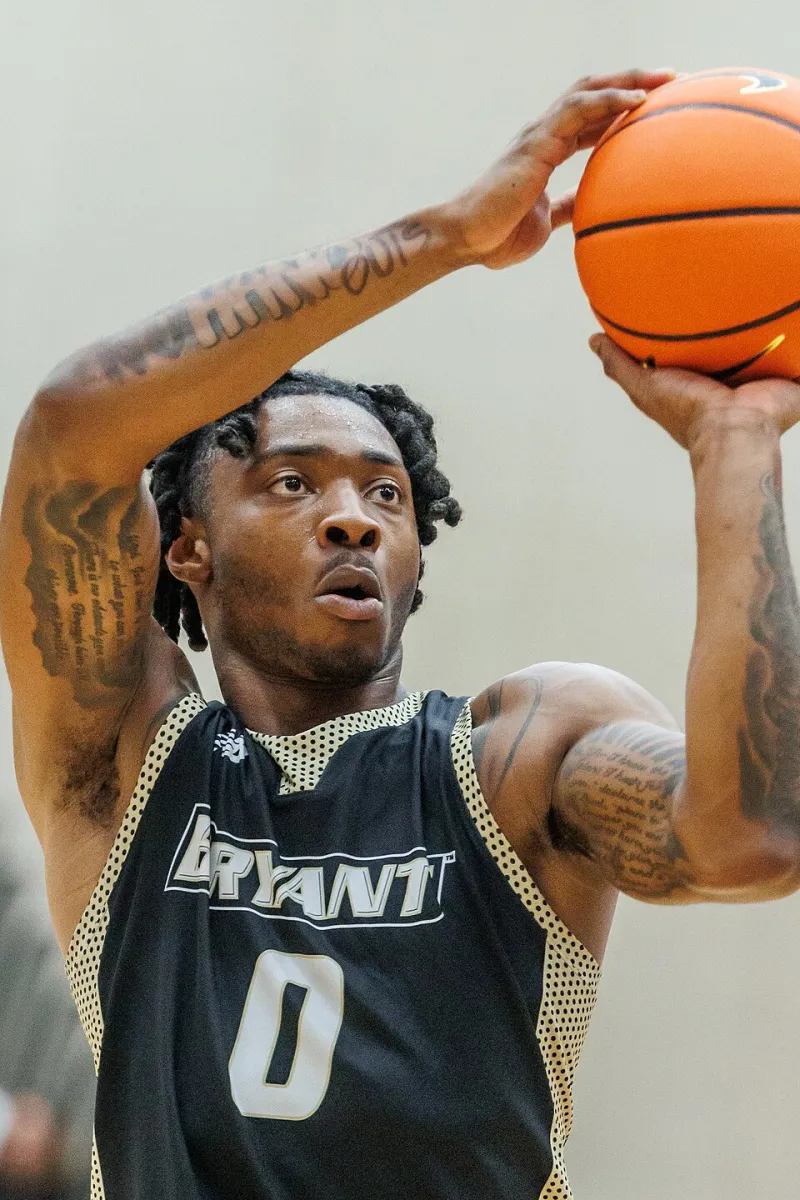
Photo: Kenneth C. Zirkel, CC BY 4.0, via Wikimedia Commons
The Stat That Flatters Everyone
Three-point percentage is one of basketball's most seductive numbers. It's clean, it's simple, and it feels definitive. Hit 40 percent from deep, and you're a good shooter. Hit 38 percent, you're solid. Drop below 35 and coaches start getting nervous.
But that number doesn't tell you how those shots were created. And that distinction — increasingly visible thanks to granular tracking data — is blowing up some comfortable assumptions about who the real shooters are at every level of the game, from college to the pros.
What "Catch-and-Shoot" Actually Measures
Let's start with the basics. A catch-and-shoot three is exactly what it sounds like: the player receives a pass and fires without dribbling. No hesitation dribble, no setup, no creation. The shot is made possible almost entirely by the work of teammates — the screener, the ball-handler running the action, the cutter drawing the defense — before the ball even arrives.
Contrast that with a self-created three: a pull-up off the dribble, a step-back after a drive-and-kick, or a shot generated out of isolation. These require a completely different skill set. Footwork, timing, the ability to create separation against a live defender.
Here's the uncomfortable truth the data keeps surfacing: a significant chunk of players with impressive three-point percentages are posting those numbers almost entirely on catch-and-shoot looks. Remove the system, and the percentage craters.
In college basketball, this problem is even more pronounced. A shooter playing alongside an elite point guard who generates open looks at a high rate will often look like a first-round draft prospect on film. Put that same shooter in a system that asks them to create their own offense, and the illusion evaporates fast.
The Dribble Count Problem
One of the most telling metrics in modern shooting analysis is average dribbles before a three-point attempt. The league-wide average on made threes hovers around 1.8 dribbles. But break that down by player, and the spread is enormous.
Elite self-creators — your Damian Lillards, your Donovan Mitchells — regularly attempt and make threes off two or more dribbles at a high clip. They're generating their own looks against set defenses, often with a hand in their face. Their percentages are built on genuine skill under duress.
Then there's a whole tier of players whose dribble count before a three almost never exceeds one — often zero. These are the pure catch-and-shoot guys. And some of them are being evaluated and compensated as if they're the same kind of shooter as the self-creators. They're not.
This matters enormously in recruiting and player evaluation. A college scout watching a wing go 5-of-9 from three in a game needs to ask: how many of those came off screens with a clean catch? How many came with time to set his feet? How many came against a defense already scrambling to recover? The raw line doesn't answer any of those questions.
Shot Clock Timing Tells the Real Story
Another layer of the analysis: when in the shot clock is the three being attempted? This one is underused and underappreciated.
Shots taken with 15 or more seconds remaining are almost always created looks — the offense has generated something out of its half-court set, and a shooter has gotten open early. These are high-quality attempts, but they also tend to come from the most favorable positions.
Shots taken between five and ten seconds on the clock are where things get interesting. This is the range where defenses have had time to recover, rotations are set, and the shooter has to work harder for the look. Players who maintain their percentage in this window are demonstrating real shooting ability under pressure.
Shots taken in the final four seconds? Those are almost exclusively self-creators or bad-decision makers, depending on the context.
When you filter three-point percentages through shot clock timing, a different leaderboard emerges. Some of the names that drop off the top of the list are genuinely surprising — guys with sterling reputations who turn out to be feasting almost exclusively on early-clock, open-catch situations.
The College Game's Blind Spot
This issue hits college basketball particularly hard for a few reasons. First, the talent disparity between rosters is much wider than in the NBA. A shooter playing on a loaded team with a brilliant playmaker can face dramatically easier looks game after game. Second, college shot tracking data — while improving — is still less granular than what's available at the pro level. Scouts often have to piece together the context manually.
Third, and maybe most importantly: college coaches game-plan specifically to free up their best shooters. A player in a system built around getting him open is going to look different than that same player would in a more balanced scheme. That's not a flaw — it's good coaching. But it creates noise in the evaluation process.
Teams that have gotten burned by this in the draft have started asking a different set of questions during pre-draft workouts. Rather than just testing shooting mechanics and spot-up percentages, some organizations are designing drills that simulate shot creation — off-dribble pull-ups, step-backs off live defenders, shots taken out of pick-and-roll reads. The results often diverge sharply from a player's college shooting stats.
Separating the Skilled From the Situated
None of this is to say that catch-and-shoot specialists aren't valuable. They absolutely are. Floor spacing is real, and players who can punish defenses for leaving them open are a legitimate offensive weapon. The corner three exists precisely because of these guys.
But there's a difference between valuing a specialist and misidentifying one as something more. Paying a catch-and-shoot wing as if he's a self-creating scorer is how teams end up with expensive roster problems when the ball-movement system around him breaks down — injury to the primary playmaker, roster turnover, a coaching change.
The tracking data is making this easier to see. Catch-and-shoot rate, dribble count, shot clock timing, defensive contest rate — stack all four of those filters on top of raw three-point percentage, and a much clearer picture of who can actually shoot emerges.
The Real Number to Watch
If you're evaluating shooters — at any level — start asking for their three-point percentage on contested catch-and-shoot attempts with fewer than ten seconds on the shot clock. It's not a perfect metric, but it's a much harder number to inflate with system advantages.
The guys who hold up under that filter? Those are your real shooters. Everyone else is working with some help they might not always have.
And in a league — and a sport — increasingly built on three-point efficiency, knowing the difference isn't just an analytics exercise. It's the whole game.