Dead Zones and Broken Angles: Why Your Favorite Shooters Are Getting Swallowed by Bad Floor Spacing

Photo by Photo by Sol Cerrud on Unsplash on Unsplash
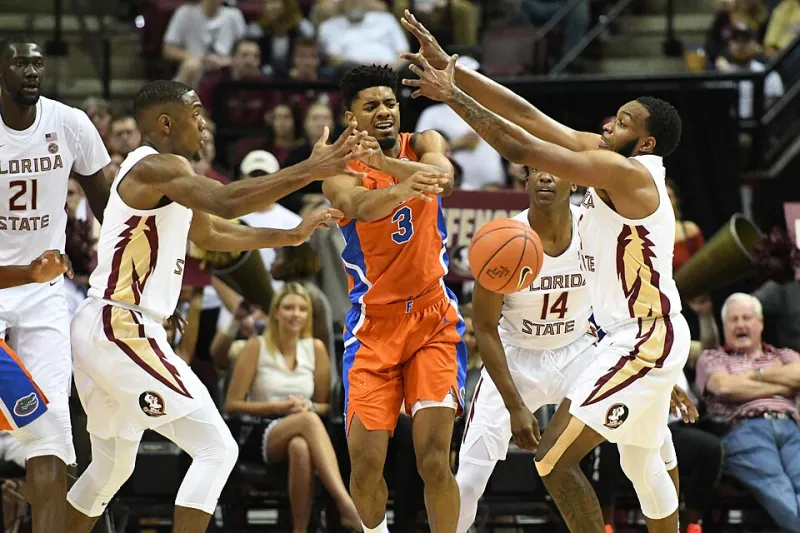
You've seen it happen. A team loads up on shooters, runs a clean set, and somehow the guy catching the ball on the wing is already two steps too close to a teammate cutting through the lane. The defender recovers. The shot goes up awkward. It clanks. Everyone moves on.
Nobody clips that play. Nobody tweets about it. But it's happening dozens of times a game across the league, and the cumulative damage is way bigger than most front offices want to admit.
The analytics conversation around three-point shooting has matured a lot over the past decade. We talk about shot quality, pull-up versus catch-and-shoot splits, corner efficiency, defender proximity — all of it. But there's one variable that keeps getting glossed over: floor geometry. Specifically, where shooters are positioned relative to each other, the ball, and the basket when the shot clock starts winding down. Get that geometry wrong, and even a 40-percent shooter starts looking like a liability.
What "Spacing" Actually Means (Beyond the Buzzword)
Coaches and analysts throw the word "spacing" around constantly, but it's worth getting specific about what good spacing actually requires from a geometry standpoint.
The ideal offensive setup pushes defenders into impossible decisions. When five players are spread across the floor at optimal distances — roughly 15 to 18 feet apart from each other at any given moment — a help defender has to cover too much ground to meaningfully contest a catch-and-shoot opportunity. The math works in the offense's favor.
But when players collapse those distances, even slightly, the geometry flips. A defender who's already shading toward the paint can now recover to a shooter in the corner because a teammate's positioning has cut the required closeout distance by six or seven feet. That's the spacing tax. You're essentially giving the defense a discount on their recovery effort, and you're paying for it in open looks that never materialize.
Tracking data from the past two seasons tells a pretty clear story. Teams whose offensive sets regularly result in two shooters operating within 12 feet of each other on the perimeter — what some analysts are calling a "compression event" — see their three-point attempt quality drop by roughly 8 to 12 percent on possessions where that compression occurs. Doesn't sound catastrophic until you multiply it across 82 games.
The Geometry Offenders
Some of the worst spacing offenders this season aren't bad teams. That's what makes this so interesting. Several playoff-caliber rosters with legitimate shooting talent are consistently committing what you might call geometric malpractice.
Take wing-heavy lineups that run a lot of two-man game action on one side of the floor. The ball handler and the screener pull two defenders toward the same zone, which is fine — that's the whole point. But if the weak-side shooters haven't drifted wide enough to punish that, they end up clumped in a corridor between the elbow and the three-point line. Defenders in help position can now tag two threats with one step. The offense has theoretically created a numbers advantage but practically given it back through poor positioning.
Court mapping tools show this happening most frequently in the middle of the second and fourth quarters, when rotations get stale and players start defaulting to comfortable spots rather than reading the defense. Habits override scheme. The geometry breaks down.
Why Elite Shooters Aren't Immune
Here's the part that should genuinely worry front offices: your best shooter can't shoot his way out of bad geometry. The league's top catch-and-shoot players — guys who hit 40-plus percent on volume — see their efficiency crater when they're catching in compressed space. We're talking drops of 6 to 9 percentage points on three-point attempts when a secondary player is within 11 feet at the moment of the catch.
Why? A few reasons. First, the catch itself becomes harder. A shooter reading a closeout has to process more information when there's nearby traffic — is that movement a teammate or a defender rotating? Second, the release point often shifts. Shooters unconsciously adjust their footwork when they sense congestion, and even a half-step deviation from their preferred launch position has measurable accuracy consequences. Third, and maybe most importantly, the defender closing out is more confident. They know the shooter has less room to operate, so they're committing harder to the contest.
The result is that you've taken a 40-percent shooter and turned him into a 33-percent shooter through geometry alone. No injury. No slump. Just bad floor architecture.
The Adjustment Is Smaller Than You Think
Here's the good news: fixing this doesn't require blowing up your system or overhauling personnel. The marginal gains are available through relatively small adjustments.
The most impactful change most teams could make is simply widening the "drift zone" for weak-side shooters by four to five feet on pick-and-roll coverage. Instead of hovering at the three-point line between the wing and the corner, those shooters need to be pushed harder into the corner or further above the break — positions that force the defense to make a binary choice rather than hedging.
Some teams are already doing this deliberately. Offenses that run what's sometimes called a "five-out spread" with a mobile big are essentially forcing the defense to guard all five potential shooters in spread positions. There's nowhere to cheat. Every compression event becomes a disaster for the defense rather than a discount.
The teams that haven't adapted are essentially leaving expected value on the floor every single night. And when you start quantifying that — even conservatively, at two to three additional made threes per game — you're talking about a swing of four to six points of expected output. Over a full season, that's the difference between a four or five seed and a one or two seed in a lot of conferences.
The Takeaway from the Numbers
Point3 has always been about getting past the surface stats and finding what the raw numbers are actually telling us. Three-point percentage and attempt volume are important, but they're outputs. Floor geometry is an input, and right now it's an undervalued one.
The teams that start mapping their own spacing failures — not just charting shots, but tracking where every player is standing when every shot goes up — are going to find efficiency they didn't know they had. It's not a scouting problem. It's not a shooting problem. It's a geometry problem.
And geometry, at least, is fixable.