Shot Wasted: The Three-Point Attempts NBA Teams Keep Taking That Are Killing Their Offense
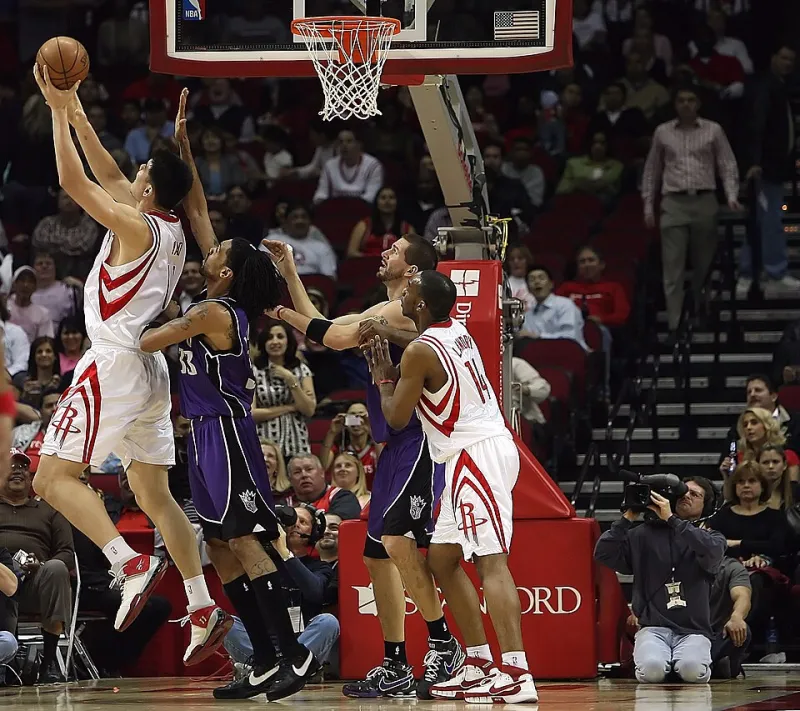
Photo: keithjj] on Pixabay, CC0, via Wikimedia Commons
The three-point line was supposed to be the great equalizer. Shoot efficiently from distance, and you can compete with anyone. That logic is sound — but somewhere between the theory and the execution, a lot of NBA teams have developed some genuinely terrible habits.
Not every three-pointer is a good three-pointer. That's obvious when you say it out loud, but the shot charts tell a different story. Across the league, franchises are burning possessions on low-percentage attempts from bad locations, handed to players who have no business launching from deep with any regularity. The efficiency gap between a well-constructed three-point diet and a sloppy one isn't marginal — it's the kind of thing that separates a 48-win team from a 54-win team.
So where exactly is the waste happening, and what does the data actually say?
The Location Problem: Not All Arc Is Equal
Let's start with geography, because this is where the math gets brutal fast.
The corner three is the most efficient shot in basketball. At 22 feet — compared to 23-9 everywhere else on the arc — it's shorter, and the geometry of the court naturally creates open looks in transition and off of skip passes. League-wide, corner threes convert at a meaningfully higher rate than above-the-break attempts. That's been true for years. It's not a secret.
And yet teams keep firing away from the wings and the top of the key at rates that don't reflect the efficiency gap. Above-the-break threes from the elbows — that dead zone between the wing and the top — are among the worst shots in the half-court game. The distance is max, the angle is awkward, and the shot usually comes off a rushed pull-up or a contested catch. Expected value on those attempts is ugly, especially when the shooter isn't a 40% guy to begin with.
Tracking data consistently shows that a significant chunk of three-point volume in the league comes from these mid-arc, elbow-extended areas where efficiency craters. Some franchises take 30% or more of their threes from spots where they're shooting under 33%. That's not a strategy — that's a leak.
The Player Archetype Problem: Who's Actually Pulling the Trigger
Location is only half the issue. The other half is personnel, and this is where front offices have been burning money they don't realize they're spending.
There's a category of player that shows up on a lot of rosters: the high-usage, mid-efficiency three-point shooter. These are guys who take a lot of threes because their role demands it — not because they're actually good at it. They'll shoot 32-34% from deep on six or seven attempts a game, and because their volume is high, the team's overall efficiency takes a quiet hit that doesn't always show up in the box score narrative.
The worst version of this is the non-shooter who gets pulled into three-point attempts by defensive attention or broken plays. A center who's 28% from three taking four attempts a game is costing his team roughly half a point per possession on those shots compared to what a corner three from a legitimate shooter would produce. Over 82 games, that adds up to a staggering number of wasted possessions.
The data on this is pretty unambiguous. Teams that concentrate their three-point volume among their top-three shooters by percentage — and actively limit attempts from the bottom of the roster — outperform their offensive efficiency expectations. It sounds obvious. A lot of teams still don't do it.
Franchise-Level Trends Worth Watching
Without calling out specific players by name, there are identifiable patterns at the franchise level that illustrate the problem.
Teams in rebuilding phases tend to be the worst offenders. Young players who are developing their games often shoot threes at high volume as part of their growth process, which is fine — except when it's happening in live games against NBA defenses with real playoff implications. Development and winning have different shot profiles, and mixing them creates statistical noise that hurts both goals.
On the other end, contending teams with established stars sometimes fall into the trap of feeding three-point looks to role players in crunch time simply because the defense is collapsing on their primary options. The logic of "kick it out" is fine. Kicking it out to a 31% shooter who's now taking a contested wing three because of defensive recovery is not fine. That's a turnover in slow motion.
What Two or Three Percentage Points Actually Means
Here's the efficiency math that should be motivating front offices to care about this more aggressively.
If a team is shooting 35% on 35 three-point attempts per game, they're scoring about 36.75 points from downtown per game. Redirect even a third of those attempts — the worst-location, worst-shooter shots — toward higher-value looks, and a realistic bump to 37.5% on that volume adds up to roughly 2-3 additional points per game. Over a full season, that's the margin between making the playoffs and watching them from home.
Three-point efficiency isn't just about finding better shooters. It's about giving your current shooters better shots from better places on the floor. That's a coaching and scheme decision, not a roster-building one, and it's available to any team willing to do the work.
The Fix Is Simpler Than It Looks
The good news is that shot redistribution doesn't require a trade. It requires discipline.
Building offensive sets that funnel attempts to the corner. Limiting three-point volume for players under a defined efficiency threshold. Designing actions that get your best shooters open looks rather than settling for pull-up threes off broken possessions. These are adjustments that happen in the film room and on the practice floor.
The league's best offensive teams aren't just shooting a lot of threes — they're shooting the right threes from the right places with the right people. The gap between that and what most teams are actually doing is where a lot of wins are quietly being left on the table.